

Communication through emoticons, also known as emoji or smileys, has already become a universal language, used daily by millions of people on platforms such as WhatsApp, Facebook, or Instagram. These symbols quickly convey emotions and moods, making online conversations much more pleasant, human, and clear. In this article, we explore how these emoticon signs appeared and offer you a small emoticon dictionary to help you use them correctly.
Emoji or emoticons – how did it all begin?
Although today we use them instinctively, the journey from simple punctuation marks to complex graphics was a long one. Many people wonder what the difference is between emoji and emoticons.
The first forms of emoticons appeared in the ’80s. More precisely, in 1982, Scott Fahlman proposed using emoticon codes made up of punctuation marks to indicate the tone of a message on university forums. This is how the famous combinations appeared:
- 🙂 to indicate a joke or a smile;
- 🙁 to express sadness or seriousness.
These rudimentary emoticon symbols were essential for adding clarity to text communication, preventing misunderstandings.
Modern graphic emojis, as we know them today, were invented in Japan in 1999 by Shigetaka Kurita. He created the first list of emoticons in graphic form, 176 symbols, for mobile phones of that time, aiming to convey information such as weather, mood, or objects in a simple visual way.
The origin of the “Smiley face” design
Before the digital era, the famous “smiley” had a very analog origin. In 1963, graphic designer Harvey Ball was hired by an insurance company to create a symbol that would boost employee morale.
The result was the perfect yellow circle, with two oval eyes and a smiling mouth, drawn in just 10 minutes for the sum of 45 dollars. Although Ball never registered the trademark, his design became the visual foundation for all the happy emoticons we use today on our phones. It proved that a simple symbol can instantly convey a mood, regardless of language.
Unicode standardization – why do we see the same symbols everywhere?
Have you ever wondered why an emoji sent from an iPhone appears, even if slightly different graphically, on a Samsung or Huawei device as well? This is due to Unicode standardization.
Each emoji is, at its core, a unique numeric code managed by the Unicode Consortium, a non-profit organization that includes tech giants such as Apple, Google, and Microsoft. This standardization ensures that:
- Emoticon codes: Each symbol has a universal “translatable” code, for example U+1F600 for the smiling face.
- Interoperability: Your message remains readable on any platform, whether we are talking about Facebook emoticons or WhatsApp emoticon symbols.
- Evolution: New symbols are approved every year, ensuring that digital language keeps pace with society’s evolution: diversity, new objects, and new moods.
The fascinating history: From text emoticons to modern emojis
Although the visual design appeared in the ’60s, their use in text began later:
- The ’80s – Keyboard emoticons: Scott Fahlman proposed using character combinations, for example :-), to distinguish jokes from serious posts on forums.
- 1999 – The Emoji revolution: Japanese designer Shigetaka Kurita created the first graphic list of emoticons, 176 pixelated symbols, for the mobile operator DOCOMO, aiming to simplify the communication of complex information such as weather and emotions.
Emoticon meaning: Guide to popular symbols
If you are looking for a correct interpretation of emoticons, you should know that their meaning can vary depending on context. However, there is a globally accepted meaning of emoticons. Here is a list of the most commonly used ones:
Emoticon dictionary: The most used symbols on WhatsApp and Facebook
- 😂 Face with tears of joy: It is the most used emoji worldwide. It expresses intense laughter, extreme amusement, or a hilarious situation.
- 😊 Smiling face with smiling eyes: It indicates genuine happiness, satisfaction, gratitude, or a positive mood: happy emoticons.
- 🙏 Folded hands: Although many confuse it with a “high five”, its main emoticon hand meaning is prayer, thanks, or gratitude.
- 😭 Loudly crying face: It represents deep sadness, but in today’s digital slang it is also often used to express overwhelming emotion, positive or negative.
- 👍 Like symbol: One of the most popular Facebook emoticons, used for approval or quick confirmation.
Meaning of love emoticons and hearts
When it comes to affection, there is an entire list of emoticons with specific meanings:
- ❤️ Red heart: The classic symbol for love and passion.
- 😘 Kiss with heart: Used to convey affection or a loving “good night”.
- 💖 Sparkling heart: Suggests new love, enthusiasm, or the “sparkle” of a relationship.
- 💕 Two hearts: Represents mutual love or affection between close friends.
Types of emoticons: The difference between Smiley, Emoticon, and Emoji
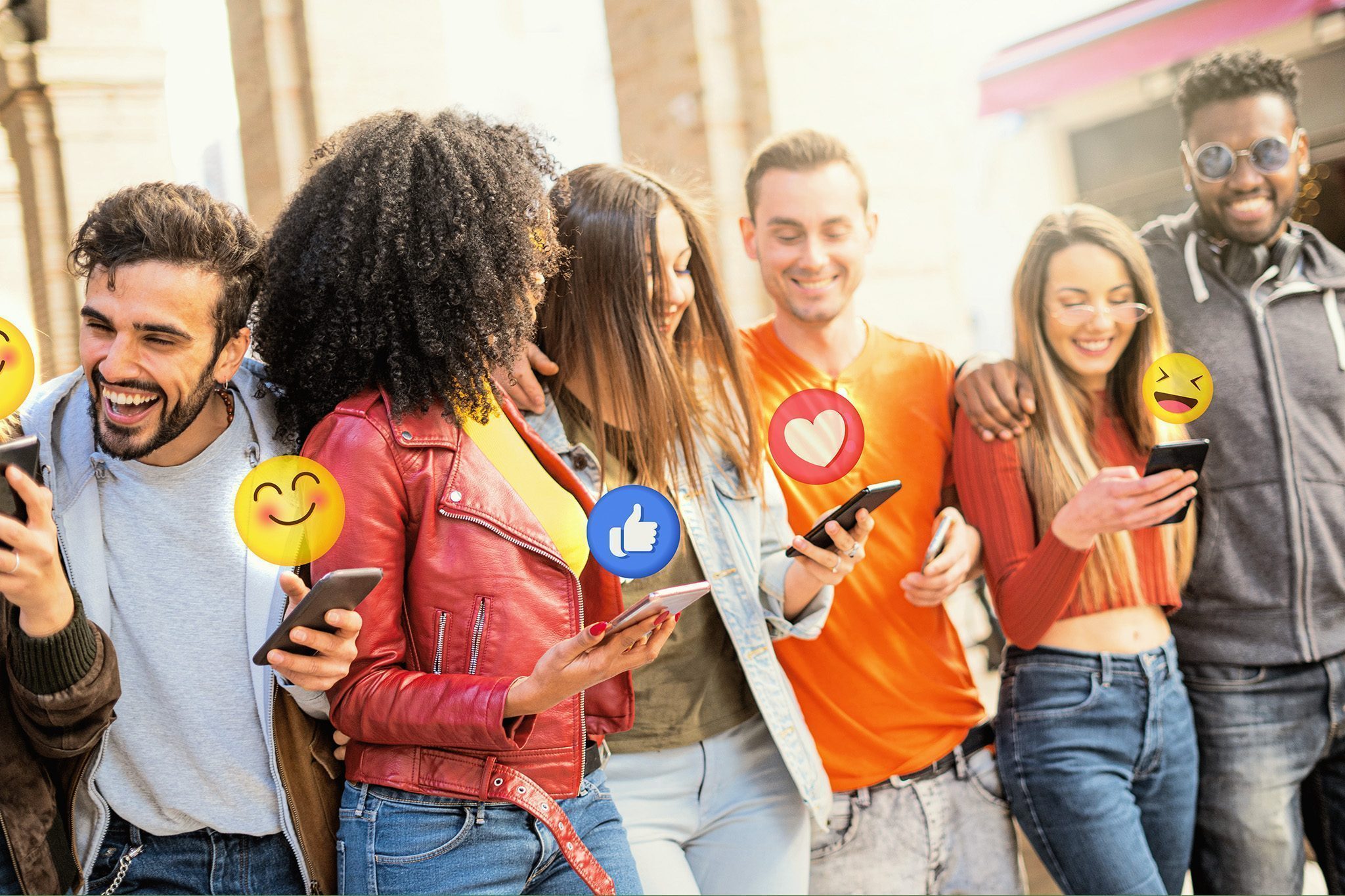
To better understand this language, we need to distinguish between the main types of emoticons:
- Smiley: The generic term for the smiling face, whether it is yellow and round or made from characters.
- Emoticon: These are keyboard emoticons made exclusively from punctuation marks, for example ;-), :-P.
- Emoji: These are real graphic images, pictograms that include not only faces, but also animals, food, flags, or objects, for example 🍕, 🐱, 🚀.
The role of emoticons in modern communication
Today, we increasingly use messages with emoticons instead of words. Why? Because our brain processes images much faster than text. Emoticons with clear emotions help humanize dry text and can completely change the perception of a sentence.
For example, a simple “I understand.” may seem cold, but “I understand. 😊” conveys friendliness. Also, funny emoticons are the “salt and pepper” of WhatsApp groups, keeping the atmosphere relaxed.
BONUS: What new emojis have appeared?
Technology does not stand still, and the list of emoticon symbols expands every year. With the release of the iOS 18.4 update, users received access to new ways of expressing themselves. Among the most interesting additions are:
- Face with bags under eyes: Perfect for tough Monday mornings.
- Fingerprint: Useful for discussions about security or identity.
- Leafless tree: A symbol for ecology or winter.
- Harp and shovel: New objects for describing hobbies or activities.
To enjoy these new emoticons, make sure your phone is updated to the latest software version.
Whether you use funny emoticons on WhatsApp or are looking for explanations for more complex emoticons, it is clear that these small pictograms have revolutionized the way we connect. They are not just drawings, but powerful tools of digital empathy.
Do you have a favorite emoji that you use excessively? Take a look at our offer of mobile phones on Klap.ro to make sure you have the newest screen on which to see your favorite emoticons at maximum resolution!
Frequently asked questions about emoticons and emoji (FAQ)
1. What is the main difference between emoji and emoticons?
Although the terms are often used as synonyms, the difference is technical. Emoticons are created from text characters and punctuation marks, for example :D, while emojis are real graphic images, colorful pictograms, for example 😃. Practically, emoticons are the “ancestors” of today’s emojis.
2. Where can I find a translation of lesser-known emoticons?
If you are looking for an exact translation of emoticons, there are platforms such as Emojipedia, where each symbol is explained in detail. However, the easiest option is to press and hold an emoji received on WhatsApp or consult this emoticon dictionary on the Klap blog to understand their social context.
3. What do the colors mean in these heart emoticons?
Each color has a different message. The meaning of heart emoticons varies as follows: the red heart is for passionate love, the orange one for friendship, the yellow heart for purity and loyalty, and the green heart is often associated with a healthy lifestyle or jealousy, depending on the context.
4. How can I use keyboard emoticons on a computer?
If you are not on a phone, you can quickly access the keyboard emoticon panel using shortcuts:
on Windows, press the Windows + . (period) key, and on Mac use the Command + Control + Space combination. This way, you will open a complete list from which you can choose any symbol you want.
5. Are there coloring emoticons for children?
Yes, many parents look for smiley emoji emoticons to color for creative activities. These can be downloaded as black-and-white coloring sheets from specialized websites, being an excellent way for children to learn to identify emotions such as happiness, sadness, or surprise through drawing.